

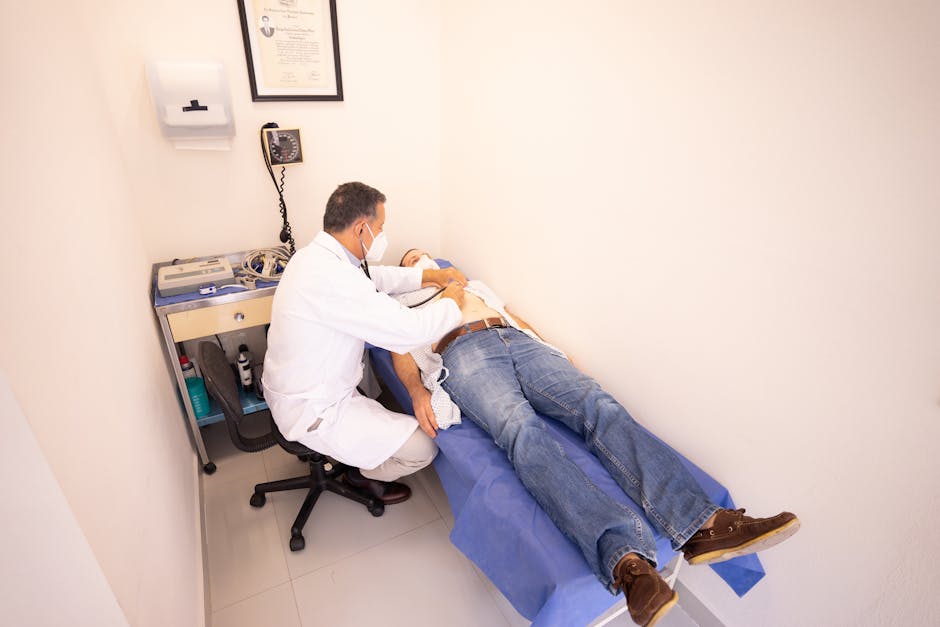
A patient walks into her annual physical feeling perfectly fine. Her blood pressure is controlled, she exercises regularly, and she has no complaints. The physician listens carefully to her heart and lungs, then places the stethoscope on her neck over the carotid artery. There it is: a faint, rhythmic whooshing sound, a carotid bruit that shouldn't be there. This small finding prompts an ultrasound, which reveals a surprise: the artery is already 60 percent narrowed, plaque buildup advancing silently in the darkness. A stroke was prevented not by luck, but by an attentive exam. This scenario plays out regularly at our medical center, where early diagnosis catches vascular disease before symptoms appear.
Carotid artery disease is often invisible. Most patients feel well until the narrowing becomes severe or a piece of plaque breaks loose. By then, a stroke may already be unfolding. Understanding who needs screening, what the ultrasound can reveal, and what the results mean is the difference between catching disease early and discovering it after permanent brain damage.
At BioSyntrx Medical Center, our coordinated cardiology and neurology team evaluates carotid artery disease with the clinical precision that protects your brain. Let's walk through the disease, the screening process, and the practical next steps if narrowing is found.
Carotid Artery Disease and the Pathway to Stroke
Two carotid arteries run up each side of your neck, delivering oxygen-rich blood to your brain, face, and scalp. These are among the most critical vessels in your body, because the brain demands a constant supply of blood and oxygen. When blood flow drops even briefly, brain cells begin to suffer.
Atherosclerosis is the culprit. Cholesterol, fat, and calcium deposits accumulate along the inner wall of the artery, forming plaque. This narrowing is called stenosis. The process develops over years or decades, often with no warning signs. The same disease that can narrow the coronary arteries in coronary artery disease can also narrow the carotid arteries. In fact, when atherosclerosis develops in one location, it often develops in multiple locations throughout the circulation.
Carotid artery disease is responsible for an estimated 10 to 20 percent of ischemic strokes in the United States. Many of those strokes could have been prevented if the narrowing had been detected and treated before a clot formed or plaque ruptured.

How Atherosclerosis Narrows the Carotid Arteries
Atherosclerosis doesn't happen overnight. Fatty streaks can begin forming in artery walls in childhood, especially in people with high cholesterol or a family history of heart disease. Over decades, these deposits thicken into fibrous plaque, hardened and calcified, narrowing the vessel.
Narrowed arteries can cause a stroke in two ways. First, progressive stenosis reduces the flow of blood to the brain, so brain cells don't receive enough oxygen. This is the silent pathway: the artery slowly closes without any warning. Second, plaque can rupture. When the fibrous cap covering unstable plaque breaks open, the body's clotting system swings into action. A clot forms on the ruptured plaque, which can then break free and travel up into smaller brain vessels where it lodges and cuts off blood flow. This second mechanism is why a patient with only mild narrowing can still suffer a major stroke.
Stenosis is graded by percentage: mild is under 50 percent, moderate is 50 to 69 percent, severe is 70 to 99 percent, and complete occlusion is 100 percent blockage. The grade matters because it determines how aggressively we monitor and treat the disease.
Risk factors that accelerate atherosclerosis include high blood pressure, high LDL cholesterol, smoking, diabetes, being over age 65, and a family history of premature heart disease. The more risk factors present, the faster the disease tends to progress.
"Carotid artery disease often causes no symptoms until a stroke or transient ischemic attack occurs, which is why it is sometimes called a silent disease."
What Are the Symptoms of a Blocked Artery in the Neck?
The reality of carotid artery disease is that it's usually silent. Patients have no chest pain, no neck pain, no warning. The first noticeable sign often comes as a sudden event: a transient ischemic attack (TIA), sometimes called a mini-stroke or warning stroke.
A TIA develops when a piece of plaque or a clot briefly blocks brain blood flow. Symptoms appear abruptly: one-sided weakness or numbness, slurred speech, confusion, or temporary vision loss in one eye, lasting anywhere from minutes to a few hours. What makes a TIA distinct is that these symptoms resolve completely on their own. Blood flow returns, the clot dissolves, and the person feels better. But this is a critical warning sign.
Another early sign is a carotid bruit, an abnormal whooshing or turbulent sound a physician hears through the stethoscope when listening over the carotid artery during a physical exam. A bruit indicates blood is flowing through a narrowed space, creating turbulence. Not every bruit means significant disease, but it always warrants ultrasound imaging to check the degree of narrowing.
The CDC defines the F.A.S.T. warning signs for stroke: Face drooping, Arm weakness, Speech difficulty, and Time to call 911. These signs require emergency care, not a scheduled appointment. Early intervention can prevent a full stroke in the critical days that follow a TIA.

- Face drooping on one side, especially if sudden
- Arm or leg weakness on one side, especially if sudden and one-sided
- Speech difficulty, slurred words, or trouble understanding others
- Vision loss in one eye only, sudden onset
- Severe headache with no known cause, appearing suddenly
- Dizziness or balance loss with sudden onset
- Numbness or tingling on one side of the face or body
If any of these symptoms appear, call 911 immediately. Do not drive yourself or wait for the symptom to pass. Time to treatment is critical.
Why Would a Doctor Order a Carotid Ultrasound?
A carotid ultrasound, also called a carotid duplex, is one of the first tests your doctor may order when carotid artery disease is suspected. Here are the most common reasons.
After a carotid bruit is heard on exam: A bruit during a routine physical is the most common trigger for carotid ultrasound. It signals that blood is flowing through a narrowed space, and imaging will show how much narrowing is present.
After stroke-like symptoms or a TIA: If you've had sudden weakness, vision loss, or speech difficulty, even if symptoms resolved, ultrasound helps identify whether carotid narrowing was the source. Knowing the source prevents a second event.
Based on cumulative risk factors: Patients over 65 with multiple risk factors are candidates for screening. These include high blood pressure, smoking history, high LDL cholesterol, diabetes, or a family history of heart disease. If cholesterol testing shows LDL above 130 mg/dL, or if blood pressure is consistently above 140/90, the risk for carotid disease rises significantly.
Before major surgery: If you're scheduled for open heart surgery, bypass surgery, or another major vascular procedure, your surgeon may order a carotid ultrasound to make sure significant narrowing won't raise the risk of stroke during anesthesia and surgery.
If you have known coronary artery disease or peripheral artery disease: Atherosclerosis does not stay confined to one location. Patients with heart disease or leg artery disease carry a much higher risk of concurrent carotid disease and often benefit from screening.
Is Carotid Artery Screening Recommended for Everyone?
The short answer is no. Routine carotid ultrasound screening is not recommended for average-risk adults with no symptoms and no prior events. Here's why: screening tests in low-risk populations produce a lot of false positives, leading patients down a path of additional testing, worry, and sometimes procedures that wouldn't have changed their health outcome.
However, screening does make sense if you fall into a higher-risk category. If you have a carotid bruit on exam, a prior TIA or stroke, multiple cardiovascular risk factors, or known coronary or peripheral artery disease, the benefit of knowing your carotid status outweighs the risk of the screening test itself.
The decision to screen is personalized. When managing high blood pressure and other risk factors is challenging, or when a physical exam finding raises concern, we discuss whether carotid imaging makes sense for your specific situation.
"Major guidelines advise against routine carotid ultrasound screening in average-risk adults without symptoms, since the potential harms of follow-up procedures can outweigh the benefits."
What Do Carotid Ultrasound Results Mean?
If your doctor recommends a carotid ultrasound, here's what to expect. The test itself is quick, painless, and requires no preparation. A technician applies warm gel to your neck and glides a small handheld probe, called a transducer, along each carotid artery. The probe sends sound waves into the artery and receives the echoes back, creating real-time images on a screen. The test takes 15 to 30 minutes and uses no needles, radiation, or sedation.
This ultrasound, called a duplex study, combines two kinds of information: the structure of the artery wall and the speed of blood flow through it. Doppler is the flow-speed part. Duplex ultrasound is a reliable, accurate method for detecting significant narrowing of the carotid arteries, and when performed in an accredited vascular laboratory by trained technicians, it's often sufficient to guide treatment decisions. That said, if severe narrowing is found and intervention is being considered, your physician may recommend follow-up CT or MR angiography to confirm the severity before proceeding with a procedure.
Cost for a carotid Doppler ultrasound typically ranges from 400 to 900 dollars before insurance, depending on where the test is performed and whether it's done with detailed measurements. Insurance usually covers the test when it's ordered for symptoms or documented risk factors. Screening tests in asymptomatic, average-risk patients may not be covered.
Results are reported in terms of percent narrowing and peak flow velocity. Here's how the grades work:
- Normal: less than 50 percent narrowing, normal flow velocity. No evidence of significant disease. Follow-up typically involves addressing modifiable risk factors and a physical exam every 1 to 2 years.
- Moderate stenosis: 50 percent to 69 percent narrowing. Carotid disease is present but not yet severe. Medical management and careful monitoring are standard, usually with ultrasound every 6 to 12 months.
- Severe stenosis: 70 percent to 99 percent narrowing. Significant risk of stroke. Medical management with statins and antiplatelet therapy is essential, and your physician will discuss whether a procedure such as carotid endarterectomy or carotid artery stenting might reduce your risk.
- Complete occlusion: 100 percent blockage. The artery is fully closed. The body often develops collateral blood flow to compensate, but the risk of stroke is high. Treatment depends on whether the occlusion causes symptoms and whether collateral flow is adequate.
Reducing Your Risk After a Carotid Artery Diagnosis
If carotid artery disease is detected, you have options, and treatment starts with stopping progression. Calcified plaque cannot be dissolved with diet or supplements alone. The goal is to stabilize plaque, prevent rupture, and reduce the clotting risk that leads to stroke.
Medical management is the foundation. Statin therapy lowers LDL cholesterol and can stabilize plaque, making rupture less likely. Daily antiplatelet therapy, typically aspirin, thins the blood slightly so clots are less likely to form and travel. These two treatments, supported by strong evidence, significantly reduce stroke risk in patients with carotid disease. Blood pressure control is equally important; uncontrolled hypertension accelerates atherosclerosis and promotes plaque rupture.
Lifestyle changes matter. Quitting smoking is the single most powerful step you can take to slow progression. Smoking accelerates atherosclerosis and makes plaque more unstable. A diet low in saturated fat and high in fiber, regular aerobic activity such as brisk walking or cycling, and controlling blood sugar if you have diabetes all slow the disease.
For severe stenosis, procedural options exist. If narrowing reaches 70 percent or greater, or if you have had a stroke or TIA attributed to carotid disease despite medical therapy, carotid endarterectomy (a surgical procedure to physically remove plaque) or carotid artery stenting (placing a tube to hold the artery open) may reduce stroke risk. These procedures carry their own risks and are chosen carefully based on your overall health and symptoms.
There's another reason to take carotid artery disease seriously beyond immediate stroke risk: the brain consequences of silent narrowing and repeated microemboli are now recognized as contributors to long-term cognitive decline. Research shows that vascular contributors to cognitive decline include carotid disease, and controlling cardiovascular risk factors helps protect thinking and memory as we age.

Statin therapy and blood pressure control reduce the risk of plaque rupture and stroke in patients with carotid artery disease, which is why these are the cornerstone of treatment after a diagnosis.
Schedule a Carotid Artery Evaluation in San Francisco
If you have risk factors for carotid artery disease, a bruit detected during an exam, or any stroke-like symptoms, scheduling an evaluation makes sense. Many patients wait for symptoms to appear before seeking help, but by then a stroke may be unfolding. Early detection changes the outcome.
Our team at BioSyntrx Medical Center coordinates cardiology and neurology so your carotid evaluation is thorough and your results are understood the same day. A carotid ultrasound is quick, painless, and noninvasive. Once we have results, we walk you through what they mean and discuss the next steps together, whether that's medical management, closer monitoring, or procedural evaluation. You'll leave with clear guidance about protecting your brain health and reducing your stroke risk. Call us at (415) 729-6843 or visit our clinic at 742 Medical Plaza Drive, Suite 210, San Francisco, CA 94107 to schedule your evaluation today.
